Destination
Diyarbakır
Attractions, both historic and modern, abound in Diyarbakir. Continuously inhabited since at least the 13th century BCE, Diyarbakir is located on the banks of the Tigris River’s historic sites built by numerous bygone empires, among them the Assyrian, Roman, and Ottoman. Guests can easily delve into the city's fascinating ancient history by taking a short stroll down to the Diyarbakir Archeology Museum, located just 50 meters (54 yards) from the hotel. The city's famous black basalt ramparts are only 300 meters (328 yards) from the hotel and afford sweeping views of the city and its environs. For those who like to shop while on business, both the city's historic Bazaar and its modern shopping centers are located within just two kilometers (1.25 miles) of the hotel.
Nearby Attractions
Diyarbakir Castle and Ramparts
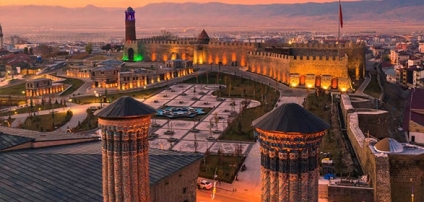
Diyarbakir’s Old City is surrounded by a dramatic set of high walls of black basalt forming a 5.5 km (3.4 mile) ring around the centre of the city. These are Diyarbakir Citadel’s outer fortifications. Diyarbakir Citadel is perched on a hill in the northeast corner of the fortifications, defended by an inner ring wall built during the Ottoman period. Four gates allow access to the Old City and 75 watchtowers, which were added during the reign of the Byzantine Emperor, Constantine II and extended in the 4th century by Valentinian I, overlook the city and surrounding landscape.


Diyarbakir Archaeology Museum
The extensive collection at the Diyarbakir Archaeology museum includes finds from the Neolithic site of Cayonu (7500–6500 BC), 65 km (40 miles) north of Diyarbakir. Also, on display are excellent collections of relics from the Urartian Empire, as well as from the Karakoyunlu and Akkoyunlu (Black Sheep and White Sheep) tribal dynasties, which ruled much of eastern Anatolia and Iran between 1378 and 1502, naturally there are also numerous pieces from the Seljuk, Byzantine and Ottoman eras.

Cahit Sitki Taranci House
Cahit Sitki Taranci was a famous Turkish poet who was a member of the Garip (meaning strange) movement of modernist poets in Turkey in the middle of the 20th century. He came from a well-known and respected Diyarbakir family, and his beautifully preserved home in the classic Diyarbakir style, with its inner courtyard, attests to his status in Turkish society and provides a valuable glimpse into a bygone era.
Diyarbakir Bazaar
Diyarbakir's bazaar, a bustling and colourfully exotic traditional market, encompasses the half-dozen streets surrounding the Ulu Mosque and is a great place to take in the local scene. The bazaar is perfect for shopping for souvenirs and sipping a refreshing tea while exploring the Old City, or on your way to the Ulu Mosque, where rug merchants ply their trade in the shade of its dome.
Great Mosque
Malabadi Bridge
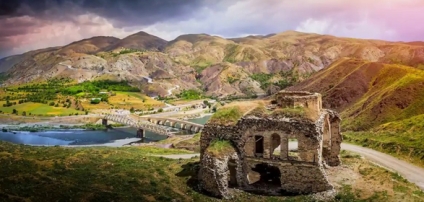
This arch bridge spanning the Batman River near Diyarbakir was built between 1146 and 1147 during the Artuk period. It is an impressive 150 mt (160 yards) long and has undergone only two restorations during its millennia-long existence, one in the late 12th century, and another at the beginning of the 20th century. The bridge remained the only way to cross the Batman up until the 1950s, when a modern vehicular bridge was built nearly parallel to it.
Meryem Ana Church
Caravanserai
A caravanserai, or han, was a roadside inn where travellers could rest and recover from the day's journey. These were the backbone of commerce during the Seljuk and early Ottoman periods, supporting the flow of information, goods and people across the network of trade routes in Turkey known as the Silk Road. The Diyarbakir caravanserai is still in use today, and its leafy courtyard with a pool at its centre provides the perfect place to enjoy a refreshing glass of tea or fruit juice while you take a break from sightseeing.
Tigris River
The Tigris has long been an important transport and trade route in a largely desert region. It is also the primary source of water for the irrigation of crops that have sustained countless Mesopotamian civilizations since the dawn of history. Diyarbakir is located on the banks of the Tigris, its black-basalt medieval ramparts within sight of a network of caves that contain Stone-Age artefacts dating back over 10,000 years.