About Zonguldak

Aside from being a huge coal production center, Zonguldak is a vital port city that is highlighted in its region for its importance. In addition to these qualities, the city plays host many touristic spots –
Unmissable destinations include Filyos, an ancient museum that resides in a historical Turkish residence and Fener Mahallesi, a neighbourhood that mesmerizes all visitors with its architectural fabric. They are both locations that should not be missed in the hospitable Black Sea region.
Another unexplored treasure of the area is its caves, which have been used by habitants since the early Christian era as temples and they have played important roles in the origin stories of ancient mythology.

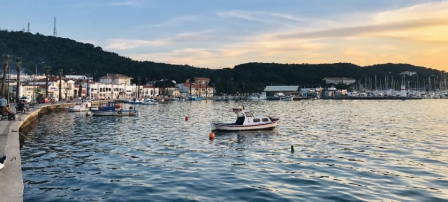
In addition to being a major coal production center, Zonguldak attracts attention as it is one of the most important coastal towns of its region. The city is also home to touristic attractions; the road towards the Eastern part of the city leads to Kopuz and Uzunkum where you can spend a peaceful afternoon in many restaurants.
Filyos, that hosts beautiful historical structures, Karadeniz Ereğlisi Museum that is located in an ancient mansion and Fener Mahallesi, that captivates everyone with its architecture are all must-see destinations located in this hospitable Black Sea town. Another interesting and undiscovered part of this region are its caves that have been the origin for many mythological stories and have been used as a place of worship since the early Christian period.


Close to Dedeman Zonguldak Hotel
Cumayanı Cave (3 km), Cehennemağzı Caves (50 km), Devrek (50 km), Karadeniz Ereğlisi (50 km), Filyos (52 km), Demirpark Shopping Center ( 100 m)


Must-see Attractions

Cehennemağzı Caves
Cehennemağzı Caves that are reffered to as “Caves in the Acheron Valley”, in historical sources are the collective name of the four caves located in Inonu Mahallesi. Cehennemağzı Caves that resulted in a variety of mythological stories and are presumed to be the main place in which secret religious rituals were conducted, during the period when Christianity was forbidden.


Cumayanı and the Kızılelma Caves

Catalagzi is only 3 km away from Cumayani Cave's two entrances. It is worth it too see the giant boilers inside. Kizilelma, which is 6.5 km long and a rather active cave. A lake is situated right next to the cave's gallery, which is about 400 m in.


Devrek
Those interested in wood carving should visit the Devrek settlement, 50 km southeast of Zonguldak, to buy well-known wooden canes. This charming town is also ideal to visit because of its enchanting forests.


Karadeniz Ereğlisi
Descending from the Frig ancestor in VI. Century B.C., Ereğli’s first name was Mariandyn. The town has been established by the famous mythological character Hercules, and took the name Herakleia Pontiki after. The town that has been home to Rome, Byzantium, Seljukian, Anatolian Seljukian and Ottoman civilizations contains fortresses, cemetaries, sarcophaguses, columns and tumulus. Bozhane Mosque, Halil Paşa Mosque, Kırmanlı Mosque, Molla Halil Mosque, Ali Molla Mosque, İskele Mosque, Ağa Mosque, Hacı Eşref ve Akarca Masjid are examples of civilian architectural structures in Karadeniz Ereğlisi.


Filyos
Filyos, established where the Filyos river flows in to the Black Sea, was called Tieion in the ancient times. This name derives from the founder of the town and theologist Tios. Currently containing first and second degree protected areas, according to archeological research, Filyos contains an acropolis, two necropolises and an ancient underwater seaport. The cultural remains that have survived have been the fortress that was built during the Roman period, a destroyed temple, an amphitheatre, a wall with three arches presumed to belong to a big structure and the remains of an aqueduct that was used to transfer water to the town.


Museums

Karadeniz Ereğlisi Museum, Maden Museum


Karadeniz Ereğlisi Museum (Halilpaşa Konağı)
An old mansion on Bozhane Street is decorated with antique materials from the Roman era and has been built on the foundations of an old church. This building, as well as its surroundings, serves as a museum. The ground floor houses a collection of marble figures from the Hellenistic, Roman and Byzantine eras, as well as glass vessels, jewelry, candles and other archaeological artifacts.
On the first floor of the museum one can find amphoras, as well as Greek, Roman, Byzantine, Seljukian and Ottoman sesterce collections. The second from displays men and women's clothing, unique to region where "elpek" fabrik and yarn are weaved. Visitors will also get to have a look at weaving tools, a variety of fabrics, weapons, seals, beads, watches, kitchen utensils and local ethnographic works.
One the third floor, one can walk through furnished displays of different Ottoman-style rooms: a living room, a guest room, a day room and a bedroom. The museum's garden displays column bases from the Greek, Roman, Byzantine, Seljukian and Ottoman eras, as well as a variety of other architectural elements such as sarcophagi and the pantomine artist Krispos' tomb and monuments.


Maden Museum
First opened in the 1880’s as a mine and subsequenly used as a training ground, the area is now planned to be restored into a Mining Museum. The mine houses a deep, sub-terrenial mine shaft and contains all of the original mining tools save for an underground well. Only a short distance from the city center, the compound also includes a multi-purpose conference room where information is presented about the history of the area and an exhibition hall.


Rates & Availability


Book Now

Subscribe to Newsletter

Send